My daughter’s Engineering Mind-map Wall
College mechanical engineering student uses mind-map wall to get A's in school. Her mom writes, " I have no idea what it all means, but I do know it helped her to get an A in the course. "

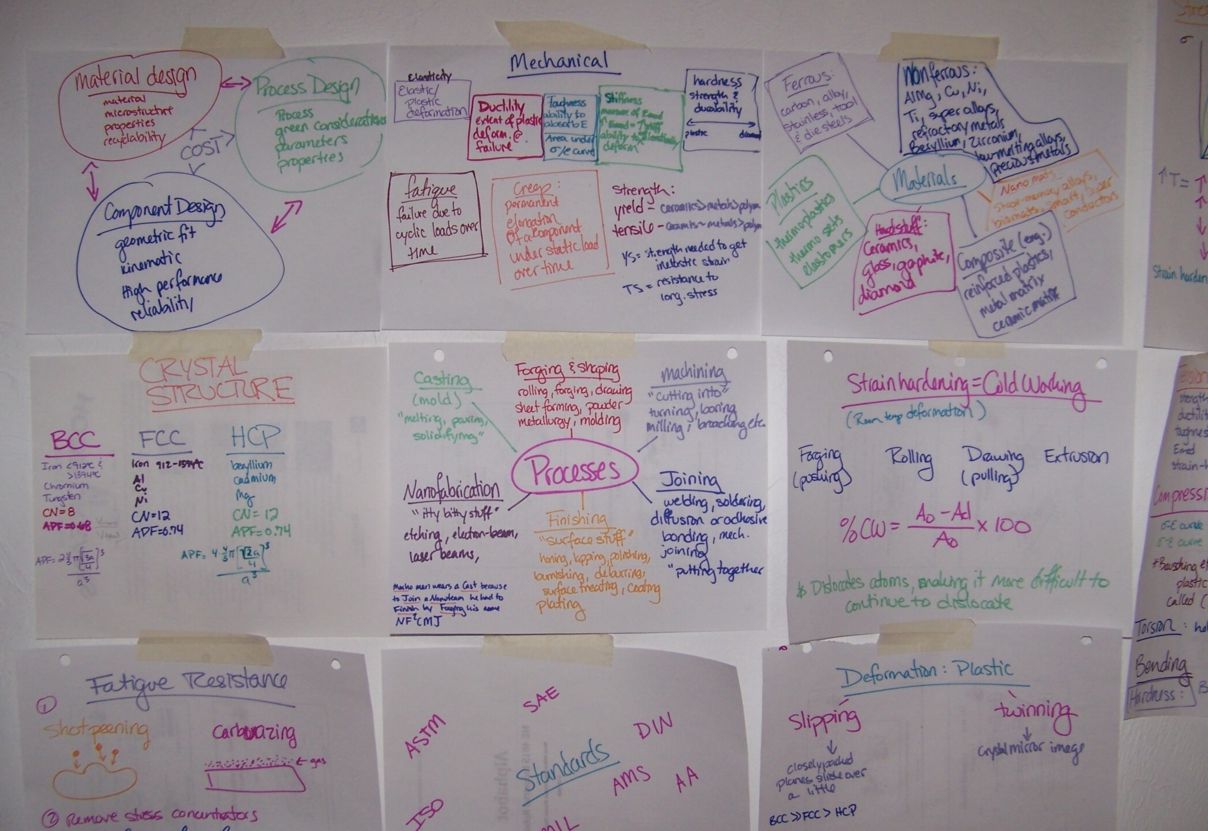
College mechanical engineering student uses mind-map wall to get A's in school. Her mom writes, " I have no idea what it all means, but I do know it helped her to get an A in the course. "

His behavior was disruptive and consequently he was frequently removed from class. I was brought in to review his files and create a complete profile and recommendations. After striking up a conversation with this young man, I told him that I would be talking with his teachers. I asked, "If there was one thing that you'd want me to tell your teachers, something that might help you, what would it be?" Without hesitation he replied...

What does an inclusive, differentiated classroom look like? You'll see: Ongoing, immediate assessment, flexible grouping, chunked lesson plans, movement strategies, collaboration and teamwork, and a variety of research-based strategies. You'll hear higher order thinking and songs, rhymes and chants as mnemonic devices. You'll see: Really Terrific Instruction! RTI
Simple – the math teacher understood the math at a deeper level. In this case, she was able to present the math concept in ways that the special education teacher didn’t know because that was her area of expertise. She came up with four or five different approaches to teach the concept while the special educator was able to teach the larger group in the way that the teacher’s manual presented it. While that was fine for the main body of students who were at grade level, it didn’t work for the ones who were struggling.
In previous articles, we've discussed defining roles when teachers and paraprofessionals are working together. The next step, once roles in the classroom have been defined is how to schedule paraprofessionals and maintain a manageable schedule.